
Prahaar – Victorious!!! PK Verdict: Gold Plus 4.5⭐️s
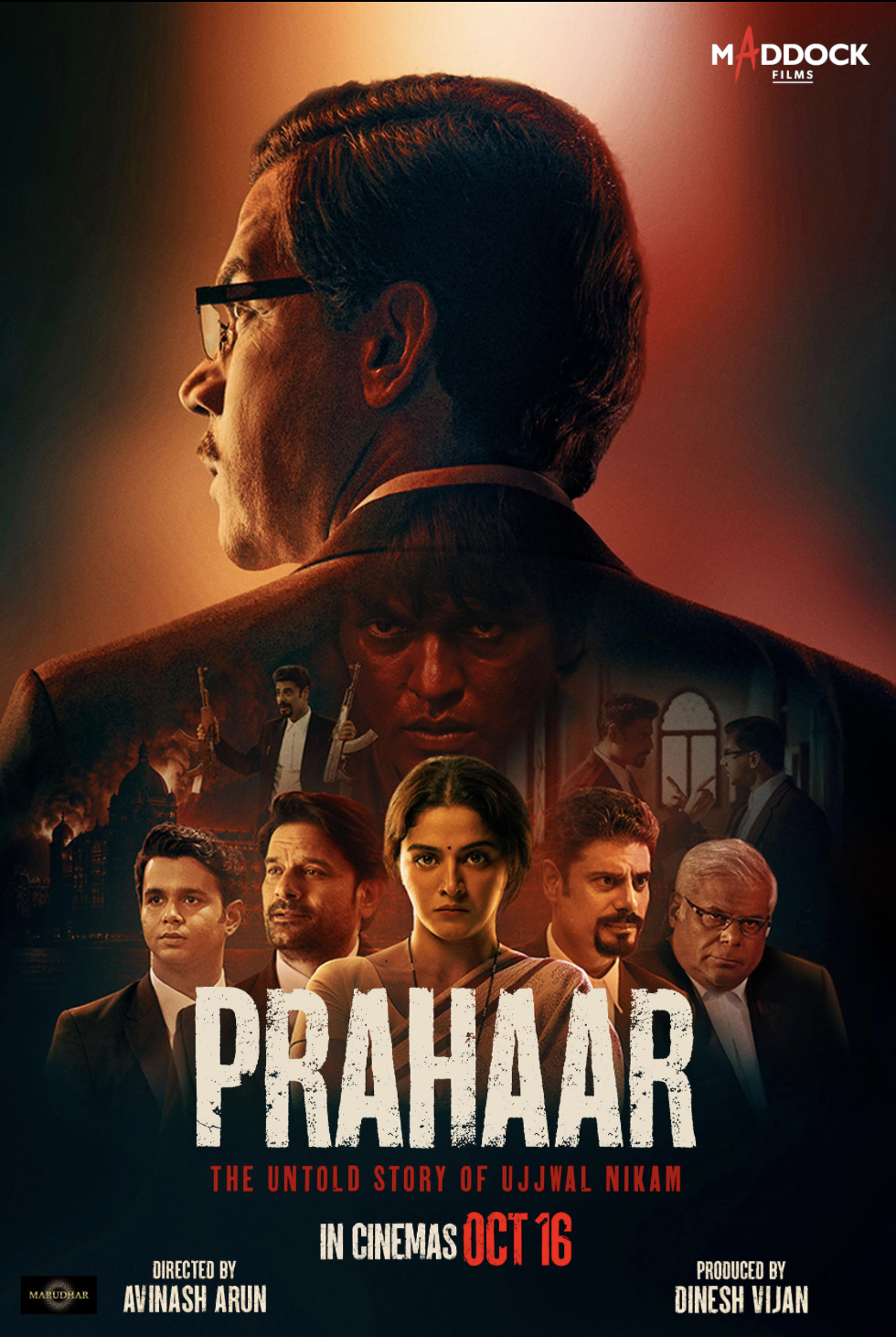
 Watch The Trailer
October 16, 2026
Rajkummar Rao, Wamiqa Gabbi, Jaideep Ahlawat, Sikandar Kher, Lalit Prabhakar
Theatre
Courtoom , true events
Prahaar – Victorious!!!
Prahaar is an unflinching reminder of a wound that Mumbai, and India, will never entirely heal from.
Avinash Arun brings the horrors of 26/11 back into our collective consciousness with a film that understands the weight of its subject. The attacks were not merely an assault on Mumbai; they were an attack on the country’s conscience, its security, and its faith in the very idea of justice. Prahaar revisits that dark chapter through the long, arduous pursuit of justice against Ajmal Kasab, the lone terrorist captured alive, and the legal battle that followed. What emerges is a film that finds its gravitas not in manufactured drama, but in the sheer magnitude of what was at stake.
At the heart of it is Ujjwal Nikam, the public prosecutor whose case against Kasab became one of the most consequential legal battles in India’s recent history. The challenge was not simply to secure a conviction. It was to ensure that the truth of an unprecedented act of terror stood firm under the scrutiny of the law. That India chose the path of due process, even when confronted with unimaginable brutality, remains central to the significance of this victory. Justice had to be delivered, but it also had to be seen to be delivered.
Rajkummar Rao is simply outstanding as Nikam. His performance is marked by restraint, precision and an extraordinary sincerity. From his body language to his measured courtroom presence, Rao creates a portrait of a man who understands that the responsibility resting on his shoulders extends far beyond the courtroom. He does not play Nikam as a larger-than-life hero; instead, he brings us closer to the human being behind the public figure. The personal sacrifices, the pressures of the profession and the emotional cost of carrying such a case become integral to the character. It is a deeply considered performance, one that keeps you invested in every progression of the legal battle.
To call Prahaar merely a courtroom drama would be to underestimate what it achieves. The proceedings are compelling because the writing recognises the ethical and constitutional stakes of the case. There is a sense of purpose to every exchange, a larger truth behind every argument. The film allows the law to command the screen without constantly resorting to dramatic embellishment. The drama is inherent in the facts, the stakes and the extraordinary circumstances surrounding the trial.
Lalit Prabhakar, as Kasab, is equally effective in inhabiting the unsettling contradictions of the man. His portrayal captures the cruelty, helplessness and double standards that make the character so disturbing. The writing gives the performance room to explore these contradictions without confusing explanation with absolution. There is no need to soften the reality of the man or the brutality of his actions. The discomfort lies precisely in confronting the human face of an act that was profoundly inhuman.
Avinash Arun’s direction is particularly effective in the way it broadens the lens beyond the courtroom. Through Nikam’s family, we see the private cost of a public responsibility. Wamiqa Gabbi, as Mrs Nikam, makes a sincere impression in a relatively limited role, bringing emotional texture to the world that exists beyond the trial. Ritvik Sahore, as Nikam’s son, adds another layer to these family dynamics. Their relationship and its emotional resolution towards the climax give the film a personal dimension that is both necessary and affecting. These quieter moments reveal what a professional commitment of this magnitude demands from those who stand beside the person carrying it.
Jaideep Ahlawat’s guest appearance leaves a considerable impression. His presence adds weight to the film, and the writing makes effective use of his performance without overstating it. Sikandar Kher, too, delivers one of his most affecting performances. There is vulnerability and strength in his portrayal, particularly in the moral complexity of defending a man accused of an act of terror against one’s own country. The film raises an uncomfortable but essential question here: what does it mean to defend the rights of someone accused of the most heinous crimes? Its answer lies in the principle that the integrity of a justice system is tested most severely when the accused is someone society finds impossible to defend. The right to legal representation is not an endorsement of the crime; it is a test of the system itself.
The film’s greatest triumph, however, lies in its emotional destination. The climax, underscored by the rendition of Vande Mataram, evokes a powerful sense of national pride and relief. It is not simply the satisfaction of a legal victory. It is the recognition that, in the aftermath of terror, the country managed to pursue justice through its institutions. The moment resonates because the film has established what that outcome demanded: patience, conviction, professional integrity and an unwavering commitment to the law.
In a time when public faith in institutions is often shaken, Prahaar makes a compelling case for the individuals who uphold their purpose with integrity. Nikam’s significance lies not merely in the outcome of the Kasab trial, but in the responsibility of ensuring that the prosecution could withstand legal scrutiny. The victory belongs to the law, to the evidence, to the process and to the people who carried that responsibility through an exceptionally difficult chapter in India’s history.
Prahaar is a reminder that justice does not erase tragedy, nor can a verdict undo the loss suffered by the victims and their families. But it can establish accountability. It can affirm the rule of law. And it can demonstrate that a nation need not abandon its principles, even when its wounds are at their deepest.
Avinash Arun brings that conviction to the screen with sensitivity and purpose. Rajkummar Rao anchors the film with a performance of remarkable sincerity, supported by an ensemble that understands the gravity of the material. The result is a film that honours not only the pursuit of justice, but also the immense responsibility that comes with it.
The final victory of Prahaar is not merely that justice prevailed. It is that, in the shadow of 26/11, the law was allowed to speak — and the nation had reason to believe in it again.
Prahaar is simply Victorious.
PK Verdict: Gold Plus 4.5⭐️s